Donelson’s strategic location near Nashville International Airport and convenient access to downtown makes it one of Middle Tennessee’s most practical and desirable communities. This established East Nashville neighborhood blends residential subdivisions with commercial development along major corridors like Lebanon Pike and Donelson Pike, creating diverse property types all requiring quality pavement maintenance. For property owners throughout this accessible community, protecting asphalt investments demands more than occasional attention—it requires proactive sealcoating that extends pavement life, prevents costly premature replacement, and maintains the professional appearance that supports property values and business success.
Quality sealcoating represents essential preventive maintenance protecting against Tennessee’s weather extremes, heavy traffic wear, and the oxidative aging that gradually destroys unprotected asphalt. Whether you’re managing a residential driveway in one of Donelson’s family-friendly neighborhoods, maintaining parking for a Lebanon Pike business, or overseeing apartment complexes and commercial properties, understanding sealcoating benefits, application timing, and maintenance requirements helps you make informed decisions protecting your pavement investment for decades to come.
Donelson’s Distinct Pavement Environment
Airport proximity creates unique environmental factors affecting pavement throughout Donelson. Aircraft traffic generates vibration that can accelerate pavement deterioration, particularly in areas closest to runways and flight paths. Jet fuel particulates and aviation-related atmospheric deposits accumulate on surfaces, potentially affecting asphalt chemistry over time. While these impacts remain modest compared to direct traffic wear, they contribute to the environmental stress that makes protective sealcoating especially valuable for Donelson properties.
Major transportation corridors including Donelson Pike, Lebanon Pike, and proximity to Briley Parkway generate heavy traffic volumes affecting commercial properties throughout the area. Business parking lots experience constant vehicle turnover with cars entering, exiting, and maneuvering in confined spaces. Delivery trucks servicing retail and restaurant establishments create concentrated loads that stress pavement beyond typical residential use. This traffic intensity accelerates wear requiring more frequent protective maintenance than lower-traffic locations.
Tennessee’s seasonal weather extremes test pavement durability through freeze-thaw cycles, summer heat, and heavy precipitation. Winter temperatures dropping below freezing create expansion-contraction stress that cracks brittle asphalt. Spring and summer thunderstorms deliver intense rainfall testing drainage systems while infiltrating any surface imperfections. Prolonged summer heat and UV exposure accelerate oxidation—the chemical breakdown causing asphalt to age prematurely. Sealcoating provides comprehensive protection against this full range of climatic challenges.
Residential areas throughout Donelson feature driveways spanning several decades of construction—from original installations during the neighborhood’s post-war development to recent construction in newer subdivisions. Older driveways often show their age through fading, cracking, and surface deterioration, while newer installations still benefit from early protective maintenance establishing good care patterns. Regardless of age, all asphalt benefits from strategic sealcoating preventing the oxidative damage that shortens pavement life.
Comprehensive Protection Through Professional Sealcoating
Sealcoating creates protective barriers defending asphalt against oxidation—the primary mechanism causing pavement aging and deterioration. Ultraviolet radiation from Tennessee’s abundant sunshine breaks down chemical bonds in asphalt binder, causing surfaces to fade from black to gray while becoming increasingly brittle and prone to cracking. Sealcoating blocks UV penetration, preserving asphalt flexibility and rich dark color while preventing oxidative damage that progressively weakens pavement structure.
Water infiltration prevention ranks among sealcoating’s most critical protective functions. Water penetrating through cracks and porous surface areas saturates base materials beneath pavement, reducing their load-bearing capacity and creating conditions for freeze-thaw damage during winter cold snaps. This subsurface deterioration progresses invisibly until sudden surface failures—potholes and major cracking—reveal extensive hidden damage requiring expensive reconstruction. Sealcoating fills minor surface voids while creating water-resistant barriers preventing destructive infiltration.
Chemical resistance protects asphalt from automotive fluids that chemically attack and soften pavement. Gasoline, motor oil, transmission fluid, brake fluid, and other petroleum products dissolve asphalt binder, creating soft spots where aggregate loosens under traffic. For commercial properties with high parking turnover, accumulated small spills create significant damage over time. Sealcoating provides chemical-resistant surfaces that facilitate spill cleanup while preventing penetration causing permanent pavement degradation.
Aesthetic transformation delivers immediate visual impact through sealcoating’s rich black appearance. Fresh sealcoating transforms faded, weathered pavement into surfaces appearing newly installed—at fractions of replacement costs. This dramatic improvement affects property values, customer perceptions, and competitive positioning. For Donelson businesses where parking lot appearance influences customer decisions, sealcoating represents high-return investment in property presentation and professional image.
The Professional Sealcoating Application Process
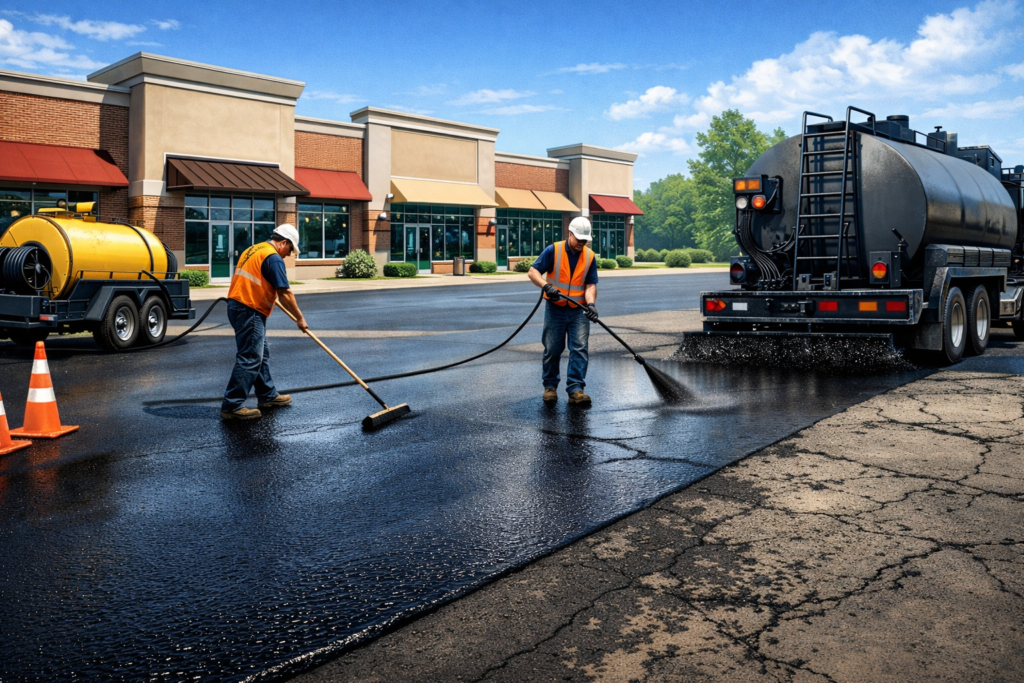
Quality sealcoating begins with thorough surface preparation determining long-term application success. Professional contractors power wash or blow clean pavement removing all dirt, debris, vegetation, and loose material. They repair significant cracks and potholes ensuring smooth, structurally sound surfaces for sealer adhesion. Oil-contaminated areas receive specialized primer treatment allowing sealer to bond over spots that would otherwise repel coating. This meticulous preparation creates optimal conditions for sealer performance and longevity.
Crack sealing precedes sealcoating application, addressing openings that allow destructive water infiltration. Professional crack repair employs hot-applied rubberized sealants remaining flexible through temperature fluctuations, expanding and contracting with pavement movement without losing bond integrity. Contractors thoroughly clean cracks removing all vegetation, soil, and debris, then fill completely creating watertight seals throughout crack depth and length. This essential preparation prevents premature sealcoating failure occurring when moisture infiltrates through unsealed cracks.
Sealer application requires favorable weather conditions and skilled technique ensuring uniform coverage and proper protective thickness. An experienced Sealcoating Contractor Donelson applies coal tar emulsion or asphalt emulsion sealers using spray equipment for efficient large-area coverage or squeegee application for smaller areas and detailed work. Two thin coats typically outperform single heavy applications—allowing proper drying between coats while building adequate protection without pooling or streaking that compromises both appearance and performance.
Detail work and finishing demonstrate installation quality and contractor professionalism. Contractors carefully edge along building foundations, curbs, sidewalks, and landscaping creating clean, straight lines enhancing visual appeal. They protect adjacent surfaces including concrete walkways, building facades, vehicles, and plantings from overspray or drips. Parking lot striping gets refreshed after sealcoating cures, creating crisp markings that enhance both safety and professional appearance. These finishing details reflect craftsmanship that property owners notice and appreciate.
Why Donelson Properties Benefit from Local Expertise
Understanding Donelson’s property mix and geographic characteristics allows experienced contractors to deliver services matching community needs and expectations. The combination of residential neighborhoods, commercial corridors, hospitality properties near the airport, and institutional facilities creates varied requirements demanding flexible, knowledgeable approaches. Contractors familiar with Donelson understand traffic patterns, access challenges, and scheduling considerations affecting different property types throughout this diverse community.
Established local contractors maintain relationships with quality material suppliers ensuring access to appropriate sealers for Tennessee’s climate and various application types. These supplier connections facilitate competitive pricing through volume purchasing, reliable product availability maintaining project schedules, and access to specialty products addressing unique situations like high-traffic commercial applications or chemical-resistant formulations. Local contractors maintain these advantageous relationships that distant operators cannot replicate.
Nashville’s metropolitan codes governing pavement maintenance require understanding that experienced local contractors possess. Regulations address environmental protection, stormwater management, and runoff control. Noise ordinances may restrict equipment operation hours in residential areas. Commercial properties face additional requirements regarding parking lot lighting, ADA compliance, and drainage. Contractors familiar with these requirements navigate regulations efficiently, preventing delays and ensuring compliant installations.
Community reputation matters profoundly for contractors whose work remains visible throughout areas where they regularly operate. Quality installations serve as ongoing advertisements while poor work provides cautionary examples affecting future business opportunities. This visibility creates powerful accountability incentivizing superior workmanship and customer service that national chains or transient operators don’t face—directly benefiting property owners through contractors’ commitment to maintaining excellent standing within the community.
Investment Analysis and Long-Term Value
Sealcoating costs typically range $0.15-0.30 per square foot depending on surface condition, required repairs, and sealer specifications. Residential driveways averaging 500-700 square feet cost approximately $75-210 for professional two-coat application including preparation and crack filling. Small commercial parking lots around 5,000 square feet cost $750-1,500. These investments extend pavement life 3-5 years per application while dramatically improving appearance—representing exceptional value in property maintenance.
Preventive maintenance through regular sealcoating reduces total pavement lifecycle costs by 50% or more compared to reactive replacement approaches. Unsealed asphalt in Tennessee’s climate typically requires replacement after 10-15 years as oxidation, water damage, and cracking compromise structural integrity. Properties maintaining consistent 2-3 year sealcoating schedules extend pavement life to 20-30 years before reconstruction becomes necessary. Multiple sealcoating applications cost far less than the premature replacement neglected pavement requires.
Property value enhancement justifies sealcoating investments beyond pavement protection alone. Well-maintained driveways and parking areas significantly influence property valuations, buyer decisions, and competitive positioning. For Donelson’s residential properties competing in active real estate markets, superior maintenance including fresh sealcoating supports values and accelerates sales. Commercial properties benefit through enhanced curb appeal that attracts customers and tenants while demonstrating professional property management standards.
Liability reduction through improved pavement condition protects property owners from premises liability exposure. Cracked, deteriorating pavement creates trip hazards, uneven surfaces causing falls, and vehicle damage risks exposing owners to injury claims and lawsuits. Regular sealcoating prevents deterioration creating these hazards while demonstrating proactive maintenance that helps defend against liability claims when incidents occur. This protection adds value particularly important for commercial properties and rental housing with higher liability exposure.
Strategic Timing and Scheduling Optimization
Sealcoating timing balances weather requirements with property operational needs for optimal results and minimal disruption. Applications require temperatures above 50°F during application and throughout 24-48 hour curing, with no rain forecast for 24 hours minimum. Nashville’s climate makes spring (April-May) and fall (September-October) ideal—moderate temperatures, lower humidity, and stable weather patterns provide reliable conditions. Summer applications work but extreme heat complicates material handling.
New asphalt requires 6-12 months curing before initial sealcoating, allowing volatile oils and solvents to evaporate while surfaces oxidize slightly improving sealer adhesion. Premature sealcoating traps volatiles creating bonding problems and surface defects that compromise performance and appearance. After initial curing, establish regular 2-3 year maintenance intervals maintaining continuous protection throughout pavement’s service life. Consistent schedules prove far more effective than sporadic applications responding only to obvious deterioration.
Residential properties schedule around homeowner convenience and weather forecasts. Spring applications prepare driveways for summer activities while fall sealcoating protects pavement heading into winter. Avoid major holidays, family events, or periods requiring uninterrupted driveway access. Professional contractors work flexibly with homeowners developing convenient schedules while ensuring adequate cure time before normal vehicle use resumes.
Commercial properties coordinate scheduling minimizing business disruption while allowing proper application and curing. Retailers schedule during traditionally slow periods or coordinate partial lot closures maintaining customer access. Restaurants time work during closed days avoiding busy meal periods. Office properties schedule during weekends or after-hours minimizing employee parking impacts. Professional contractors develop detailed traffic management plans maintaining business operations throughout application and curing periods.
Maintenance Practices Maximizing Pavement Investment
Regular inspections identify developing problems before they compromise sealcoating protection or require expensive repairs. Walk driveways and parking areas quarterly checking for new cracks, oil stains, wear patterns, drainage issues, or areas showing unusual deterioration. Address problems promptly—crack sealing, stain removal, and drainage corrections prevent minor issues from escalating into expensive failures requiring extensive reconstruction. These brief inspections provide early warning preventing accelerated deterioration.
Routine cleaning extends sealcoating life while maintaining professional property appearance. Sweep or power wash parking areas and driveways regularly removing dirt, debris, and organic material. Clean automotive fluid spills immediately using absorbent materials and appropriate cleaners—petroleum products penetrate even through sealcoating if allowed to stand. Remove vegetation growing through cracks before roots expand causing damage. These simple practices preserve both protection and aesthetics between professional applications.
Drainage maintenance prevents water damage that destroys pavement regardless of sealcoating quality. Keep catch basins and drainage structures clear of leaves, debris, and sediment allowing proper water flow. Maintain positive surface grades directing water toward designed drainage points rather than allowing ponding. Address settling creating depressions where water accumulates—standing water accelerates deterioration even through intact sealcoating. Proper drainage prevents most premature pavement failures independent of sealcoating schedules.
Snow and ice management protects sealcoating during Nashville’s occasional winter weather events. Use calcium chloride or magnesium chloride de-icers rather than sodium chloride (rock salt) which damages both asphalt and concrete. Apply de-icing chemicals sparingly—excess amounts accelerate pavement deterioration. Avoid metal snow shovels or plow blades directly contacting pavement—use plastic blades or maintain slight clearance preventing gouging that damages fresh sealcoating.
Environmental Responsibility and Sustainable Practices
Sealer selection affects environmental impact with options balancing performance and ecological responsibility. Coal tar emulsion sealers provide superior durability and chemical resistance but contain polycyclic aromatic hydrocarbons (PAHs) raising concerns about runoff impacts on water quality. Asphalt emulsion alternatives offer reduced environmental footprint with performance adequate for most residential and many commercial applications. Environmentally conscious property owners increasingly choose asphalt emulsions reflecting sustainability values.
Runoff management protects local water quality during and after sealcoating application. Professional contractors prevent sealer from entering storm drains through careful application technique, temporary barriers, and strategic timing. They ensure adequate curing before rainfall exposure preventing fresh material from washing into drainage systems reaching local waterways. Properties near streams, wetlands, or environmentally sensitive areas warrant extra precautions protecting these community resources.
Low-VOC (volatile organic compound) formulations reduce air emissions during application and curing periods benefiting both air quality and worker health. These advanced sealers meet increasingly stringent environmental regulations while delivering effective pavement protection. They produce less odor benefiting applicators and nearby property occupants during work. While potentially costing slightly more than traditional formulations, low-VOC products support environmental health valued throughout progressive communities.
Efficient material management minimizes waste and environmental impact. Professional contractors accurately calculate required quantities avoiding excess becoming waste. They maintain equipment properly preventing leaks, spills, or material losses. Empty containers get recycled when programs exist. Application equipment gets cleaned responsibly preventing sealer from contaminating soil or entering drainage systems. These practices demonstrate environmental stewardship while controlling costs through efficient operations.
Selecting Qualified Professional Contractors
Experience serving Donelson properties indicates understanding of local requirements, property types, and community expectations. Request references from similar properties—residential neighborhoods for driveway work or comparable commercial properties for parking lot applications. Actually contact references asking about experiences, work quality, communication, timeline performance, and overall satisfaction. Multiple positive experiences from nearby properties suggest consistent capability and valuable local familiarity.
Professional credentials demonstrate competence and industry commitment beyond minimum requirements. Certifications from organizations like the Pavement Maintenance Association indicate formal training in best practices. Manufacturer certifications for specific sealer products show expertise with those materials and proper application techniques. Business licensing and contractor registrations confirm legitimate operations. While credentials don’t guarantee quality, they indicate professionalism and technical knowledge supporting superior outcomes.
Insurance coverage protects property owners from liability during sealcoating operations. Verify contractors carry comprehensive general liability insurance covering property damage and bodily injury from work activities. Workers compensation insurance protects against liability for worker injuries occurring on your property. Environmental/pollution liability addresses potential claims from spills or runoff issues. Request insurance certificates documenting coverage and verify policies directly with carriers before authorizing work to begin.
Detailed written proposals protect both parties through clear documentation of scope, specifications, and mutual expectations. Proposals should specify surface preparation methods, crack repair extent and techniques, sealer type and coverage rate, number of coats, curing requirements, and project timeline. Include what’s specifically excluded preventing misunderstandings about scope. Vague estimates hide assumptions creating dispute opportunities—comprehensive specifications establish shared understanding preventing conflicts that create dissatisfaction despite quality workmanship.
Your Donelson property deserves sealcoating services executed with expertise and professionalism that protects your pavement investment while maintaining the quality standards this accessible, growing community expects and values.
Frequently Asked Questions
How long does professional sealcoating actually last? Quality sealcoating typically lasts 2-3 years depending on traffic volume, weather exposure, and maintenance practices. High-traffic commercial areas may need more frequent applications while protected residential driveways can extend intervals. Regular inspections determine optimal reapplication timing based on actual observed condition rather than rigid time-based schedules.
Can you sealcoat over existing cracks without repairing them first? Sealcoating fills only hairline cracks and minor surface imperfections. Cracks wider than 1/4 inch require proper crack sealing before sealcoating for effective protection. Attempting to sealcoat over significant cracks wastes money—water will continue infiltrating through unsealed cracks causing progressive damage despite surface sealcoating.
What weather conditions are needed for sealcoating application? Temperatures must remain above 50°F during application and throughout 24-48 hour curing with no rain forecast for 24 hours minimum. Ideal conditions include moderate temperatures (60-80°F), low humidity, and clear skies. Extreme heat, cold, high humidity, or rain threats prevent proper application and curing.
Will sealcoating make my old driveway look brand new? Sealcoating dramatically improves appearance, transforming faded gray asphalt to rich black surfaces appearing much newer. However, it doesn’t eliminate significant structural damage, major cracks, or severe deterioration. Proper repairs before sealcoating maximize aesthetic improvement, but severely damaged pavement may need replacement rather than cosmetic treatment.
How soon after sealcoating can I park on my driveway? Light foot traffic is generally safe after 4-6 hours. Vehicle traffic should wait 24-48 hours depending on weather conditions, temperature, humidity, and specific sealer type used. Contractors provide guidance based on actual conditions. Premature use risks tracking, surface damage, and compromised curing affecting long-term performance.